1. Introduction: Education as the Architecture of the Mind
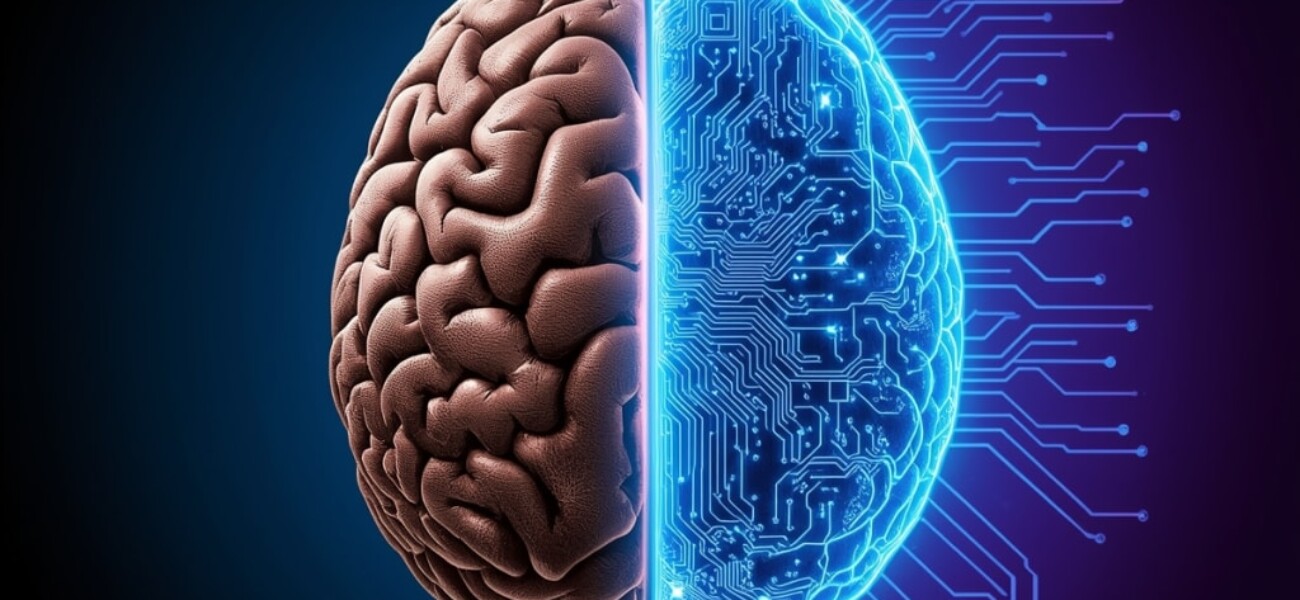
Human intelligence does not emerge fully formed at birth. It is constructed gradually, shaped by experience, guided by culture, and refined by education. If the human mind were a building, education would be its blueprint—the design that determines how strong, flexible, creative, and functional the structure becomes.
Education is not simply the transmission of facts. It is the deliberate shaping of how people think, reason, imagine, and act. Every lesson learned, every question asked, and every challenge faced contributes to the architecture of intelligence.
Without education, intelligence remains potential energy. With education, it becomes directed power.
In this sense, education is not an optional social service; it is the fundamental mechanism through which humanity evolves intellectually.
2. Understanding Human Intelligence
To understand education as a blueprint, we must first understand what intelligence truly is.
2.1 Intelligence Beyond IQ
For many years, intelligence was measured narrowly through IQ tests, logical reasoning, and mathematical ability. However, modern psychology reveals that intelligence is multi-dimensional.
Human intelligence includes:
- Logical intelligence – the ability to reason and solve problems.
- Linguistic intelligence – the ability to communicate effectively.
- Emotional intelligence – the ability to understand and manage emotions.
- Social intelligence – the ability to interact with others.
- Creative intelligence – the ability to generate original ideas.
- Practical intelligence – the ability to apply knowledge in real life.
Education plays a critical role in developing each of these dimensions.
A system of education that focuses only on exams and memorization develops only a fraction of human intelligence.
2.2 Intelligence as a Dynamic Process
Intelligence is not fixed; it is dynamic. The brain is constantly changing through learning, a phenomenon known as neuroplasticity.
Every time a person learns something new, neural connections are formed or strengthened. Education, therefore, is not just information transfer; it is physical transformation of the brain.
This means that education literally reshapes the human mind.
3. Education as Cognitive Engineering
Education can be seen as a form of cognitive engineering—the intentional design of mental capabilities.
3.1 Shaping Thought Patterns
Education determines how individuals approach problems:
- Do they think critically or accept information blindly?
- Do they see challenges as opportunities or threats?
- Do they rely on logic, emotion, or intuition?
These patterns are not accidental; they are cultivated through educational experiences.
3.2 Building Mental Frameworks
Through education, people develop frameworks for understanding reality. For example:
- Science teaches cause-and-effect reasoning.
- History teaches perspective and continuity.
- Literature teaches empathy and interpretation.
- Mathematics teaches precision and abstraction.
Each subject contributes a unique structure to the mind.
4. The Early Years: Foundations of Intelligence
The blueprint of intelligence begins in early childhood.
4.1 The Role of Family
Before formal schooling, the family is the first educational institution. The language children hear, the questions they are encouraged to ask, and the values they observe shape their cognitive development.
A child raised in an environment of curiosity and dialogue develops a different kind of intelligence from one raised in fear and silence.
4.2 Early Childhood Education
Research shows that the first five years of life are crucial for brain development. Quality early education enhances:
- Language skills
- Emotional regulation
- Social interaction
- Problem-solving abilities
Thus, education does not start in school; it starts in the home and community.
5. Formal Education and the Structuring of Intelligence
Formal education introduces systematic learning.
5.1 Curriculum as Blueprint
The curriculum determines what kind of intelligence society values. For example:
- A curriculum dominated by science and technology produces technical thinkers.
- A curriculum rich in arts and humanities produces creative and reflective thinkers.
- A curriculum focused on rote learning produces obedient but uncritical minds.
Therefore, curriculum design is not neutral; it is ideological.
5.2 Teaching Methods and Cognitive Growth
How teachers teach is as important as what they teach.
- Interactive teaching fosters critical thinking.
- Authoritarian teaching fosters conformity.
- Inquiry-based learning fosters innovation.
The classroom is not just a place of knowledge transfer; it is a laboratory of intelligence formation.
6. Education and Creativity
Creativity is a core component of human intelligence.
6.1 The Creative Mind
Creative intelligence allows humans to imagine possibilities beyond existing realities. It is the foundation of art, invention, and scientific discovery.
However, many educational systems unintentionally suppress creativity by:
- Punishing mistakes
- Rewarding conformity
- Discouraging unconventional thinking
6.2 Reimagining Creative Education
To nurture creativity, education must:
- Encourage experimentation
- Accept failure as part of learning
- Value original ideas
A truly intelligent society is one that educates not only thinkers but creators.
7. Emotional Intelligence and Education
Intelligence is not purely cognitive; it is emotional.
7.1 Emotional Literacy
Education should teach individuals to understand their emotions and those of others. Emotional intelligence enhances:
- Leadership
- Communication
- Conflict resolution
- Mental health
Yet, emotional education is often neglected in schools.
7.2 The Cost of Emotional Illiteracy
When education ignores emotional development, societies produce individuals who are intellectually skilled but emotionally immature.
Such individuals may be brilliant engineers but poor leaders, talented professionals but broken human beings.
8. Education and Moral Intelligence
Moral intelligence refers to the ability to distinguish right from wrong and act ethically.
8.1 Values in Education
Every educational system implicitly teaches values. The question is not whether education teaches morality, but what kind of morality it teaches.
Education can promote:
- Integrity or corruption
- Responsibility or selfishness
- Compassion or indifference
8.2 Knowledge Without Ethics
History shows that highly educated individuals can commit great atrocities when knowledge is divorced from ethics.
Therefore, education must integrate intellectual and moral development.
9. Education as Social Blueprint
Education shapes not only individuals but societies.
9.1 Collective Intelligence
A society’s level of intelligence is determined by the quality of its education. Educated societies tend to be more innovative, democratic, and resilient.
9.2 Education and Social Behavior
Education influences how people:
- Resolve conflicts
- Participate in governance
- Treat minorities
- Respond to crises
Thus, education is the blueprint of social behavior.
10. The Limitations of Traditional Education
Despite its importance, traditional education has limitations.
10.1 Standardization vs Individuality
Standardized education treats all learners as identical, ignoring individual differences in talents and learning styles.
10.2 Overemphasis on Memorization
Many systems prioritize memorization over understanding, producing students who can recall information but cannot apply it.
10.3 Disconnection from Real Life
Education often fails to prepare learners for real-world challenges such as entrepreneurship, relationships, and ethical dilemmas.
11. Redesigning the Blueprint of Intelligence
To truly serve humanity, education must be redesigned.
11.1 Personalized Learning
Education should adapt to individual learners rather than forcing learners to adapt to rigid systems.
11.2 Integrative Learning
Subjects should be connected rather than isolated. Real-world problems require interdisciplinary thinking.
11.3 Human-Centered Education
Education should prioritize human development over exam performance.
12. Conclusion
Education is the invisible blueprint that shapes the architecture of human intelligence. It determines how people think, feel, create, and act.
When education is shallow, intelligence becomes fragmented.
When education is deep, intelligence becomes holistic.
The future of humanity depends on how well we design this blueprint.