
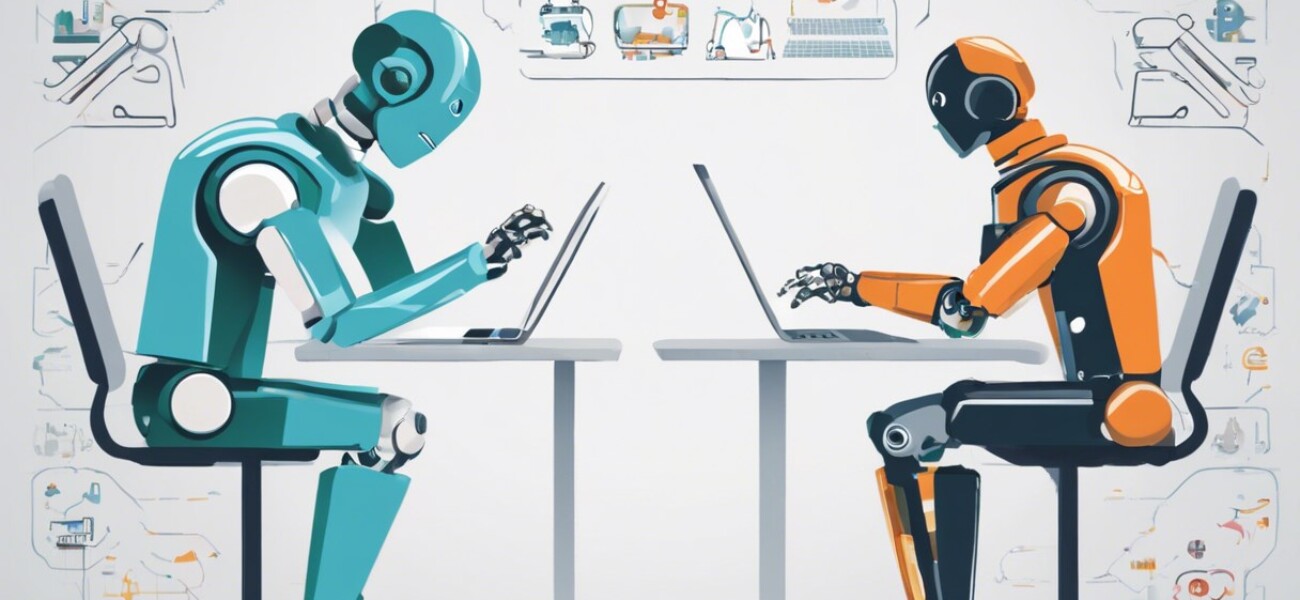
The Rise of Intelligent Machines
For centuries, human labor has been the engine of economic progress. Farmers cultivated land, artisans crafted goods, clerks managed records, and professionals delivered specialized services. Each technological revolution—from the steam engine to electricity to computers—has reshaped work, but none has challenged human relevance as deeply as artificial intelligence (AI).
Today, AI systems can write articles, diagnose diseases, drive vehicles, analyze financial markets, design products, and even create art. Tasks once considered uniquely human are increasingly performed by machines with speed, accuracy, and scalability. This has sparked global anxiety: Will AI replace traditional jobs entirely? Will millions become unemployed? Or will AI simply transform work rather than destroy it?
The answer is complex. AI is not just replacing jobs—it is redefining the meaning of work itself.
1. Understanding Artificial Intelligence Beyond the Hype
Artificial intelligence refers to machines designed to perform tasks that typically require human intelligence. These tasks include learning, reasoning, problem-solving, perception, and language processing.
AI is not a single technology but a combination of systems such as:
- Machine learning
- Deep learning
- Natural language processing
- Computer vision
- Robotics
- Predictive analytics
Unlike traditional machines, AI systems improve over time. They learn from data, adapt to patterns, and optimize performance without direct human intervention.
This adaptive capability is what makes AI fundamentally different from previous technological tools. While machines once replaced physical labor, AI now challenges cognitive labor.
2. Historical Perspective: Technology and Job Displacement
Fear of job loss due to technology is not new. During the Industrial Revolution, machines replaced manual labor in factories. Many workers protested, fearing unemployment. However, history shows that while technology destroys certain jobs, it also creates new industries and opportunities.
For example:
- The automobile replaced horse carriage drivers but created mechanics, engineers, and logistics industries.
- Computers eliminated typists but created software developers, IT specialists, and digital marketers.
- The internet disrupted traditional media but created content creators, e-commerce entrepreneurs, and remote workers.
AI represents a similar but more profound shift. Unlike previous technologies, AI targets both manual and intellectual labor. This raises unprecedented questions about the future of human employment.
3. Traditional Jobs Most Vulnerable to AI
Not all jobs face equal risk. AI is most effective in roles that involve repetitive tasks, predictable patterns, and data-driven decision-making.
3.1 Administrative and Clerical Jobs
AI systems can process documents, manage schedules, respond to emails, and handle customer queries through chatbots. Roles such as data entry clerks, receptionists, and call center agents are increasingly automated.
3.2 Manufacturing and Industrial Jobs
Robotics combined with AI has transformed manufacturing. Smart machines can assemble products, inspect quality, and optimize production lines with minimal human involvement.
3.3 Transportation and Logistics
Autonomous vehicles, drones, and AI-driven logistics systems threaten jobs such as drivers, delivery personnel, and warehouse workers.
3.4 Financial and Accounting Roles
AI algorithms analyze financial data, detect fraud, predict market trends, and automate accounting tasks. Many routine financial roles are being replaced or restructured.
3.5 Retail and Customer Service
Self-checkout systems, recommendation algorithms, and virtual assistants reduce the need for human staff in retail and service industries.
These examples illustrate a broader pattern: jobs based on routine processes are increasingly vulnerable to automation.
4. Jobs Resistant to AI: The Human Advantage
Despite its power, AI has limitations. Certain human qualities remain difficult to replicate.
4.1 Creativity and Innovation
While AI can generate content, it lacks genuine imagination, emotional depth, and contextual understanding. Artists, designers, strategists, and innovators still play crucial roles.
4.2 Emotional Intelligence and Empathy
Professions requiring human connection—such as therapists, teachers, social workers, and caregivers—depend on empathy, trust, and emotional nuance.
4.3 Complex Decision-Making and Leadership
Leaders must navigate uncertainty, ethics, culture, and human dynamics. AI can provide data but cannot fully replace human judgment.
4.4 Ethical and Moral Reasoning
AI operates based on algorithms, not moral values. Humans remain essential in ethical decision-making and governance.
Thus, AI does not eliminate all jobs; it reshapes the value of human skills.
5. Economic Implications of AI-Driven Automation
The replacement of traditional jobs by AI has profound economic consequences.
5.1 Productivity and Efficiency
AI increases productivity by performing tasks faster and more accurately than humans. This can lead to economic growth and lower costs for consumers.
5.2 Job Polarization
AI tends to eliminate middle-skill jobs while increasing demand for high-skill and low-skill roles. This creates a polarized labor market with fewer stable middle-class jobs.
5.3 Income Inequality
Companies that control AI technologies accumulate massive wealth, while displaced workers struggle to adapt. This widens economic inequality.
5.4 New Economic Models
AI-driven automation may force societies to rethink economic systems, including universal basic income, reskilling programs, and new labor policies.
6. Psychological Impact of AI on Workers
Beyond economics, AI affects human identity and self-worth.
Many people derive meaning from their professions. When AI replaces their roles, they experience not only financial loss but also psychological disorientation.
Fear of irrelevance, anxiety about the future, and resistance to change are natural reactions. However, history suggests that human adaptability is stronger than technological disruption.
The challenge is not whether humans will survive in the AI era, but how they will redefine their purpose.
7. AI as a Tool for Human Empowerment
While AI replaces certain jobs, it also empowers individuals and businesses.
Entrepreneurs use AI to automate operations, analyze markets, and scale businesses. Professionals use AI to enhance productivity and creativity. Students use AI to access knowledge and personalized learning.
In this sense, AI is not just a competitor; it is a collaborator.
Those who learn to work with AI rather than against it will thrive in the new economy.
8. The Transformation of Work, Not Its End
The narrative that “AI will destroy all jobs” is misleading. Work will not disappear; it will evolve.
Traditional jobs will transform into hybrid roles combining human judgment with AI tools. New professions will emerge in fields such as AI ethics, data science, digital security, and human-machine interaction.
The key question is not whether AI will replace jobs, but whether humans will adapt fast enough to remain relevant.
9. Education in the Age of AI
Traditional education systems were designed for industrial economies. They emphasize memorization and standardized testing. However, AI can outperform humans in information processing.
In the AI era, education must shift from knowledge acquisition to skill development.
Critical thinking, creativity, emotional intelligence, adaptability, and lifelong learning become more important than memorizing facts.
Without educational reform, millions of people risk becoming obsolete in the AI-driven economy.
10. The Moral Dilemma of Automation
AI raises ethical questions:
- Should companies replace humans with machines purely for profit?
- Who is responsible when AI makes mistakes?
- How should societies protect displaced workers?
- Should there be limits on automation?
These questions have no simple answers. The future of work is not just a technological issue but a moral and political one.
11. AI and the Global Workforce
The impact of AI varies across regions.
Developed countries with advanced technology may experience rapid automation but also create high-tech jobs. Developing countries, which rely heavily on manual labor, may face severe disruptions.
At the same time, AI creates global opportunities. Remote work, digital platforms, and online businesses allow individuals from developing countries to participate in the global economy.
Thus, AI is both a threat and an opportunity for global labor markets.
12. A New Definition of Job Security
In the past, job security meant working for one company for decades. In the AI era, this model is obsolete.
Future job security depends on adaptability, continuous learning, and skill diversification.
The most secure individuals are not those with stable jobs, but those with transferable skills and the ability to reinvent themselves.