1. Introduction: Education Beyond the Classroom
Education is often misunderstood as the simple act of going to school, passing examinations, and earning certificates. But in reality, education is far deeper and more powerful than grades or classrooms. It is the process through which human beings discover meaning, develop skills, shape character, and transform their societies.
From the earliest civilizations to the digital age, education has been the primary force that separates stagnation from progress. It determines how individuals think, how communities solve problems, and how nations compete in the global arena.
Education is not merely preparation for life; it is life itself.
2. The Origins of Education: From Survival to Civilization
Long before formal schools existed, education began as a survival tool. Early humans taught their children how to hunt, gather food, make tools, and protect themselves from danger. Knowledge was transmitted orally—from elders to younger generations—through stories, observation, and practice.
As societies became more complex, education evolved. Ancient civilizations such as Egypt, Mesopotamia, China, India, and Greece developed structured systems of learning. They taught mathematics, astronomy, philosophy, medicine, governance, and arts. Education became a means of preserving culture and advancing civilization.
In ancient Greece, philosophers like Socrates, Plato, and Aristotle laid the foundation of critical thinking and rational inquiry. In Africa, traditional education emphasized community values, moral discipline, craftsmanship, and leadership. In Asia, Confucianism shaped education around ethics, respect, and social harmony.
Thus, education has always been tied to the needs and values of society.
3. Education as a Tool for Personal Transformation
At the individual level, education is the most powerful instrument for personal growth.
3.1 Intellectual Development
Education trains the mind to think critically, analyze information, and solve problems. It teaches individuals how to question assumptions, evaluate evidence, and make informed decisions.
A person who is educated does not simply accept information; they interpret it. They move from ignorance to understanding, from confusion to clarity.
3.2 Emotional and Moral Growth
True education is not only about intelligence but also about character. It shapes values such as honesty, empathy, discipline, and responsibility.
An educated person understands the consequences of their actions, respects others, and contributes positively to society. Without moral education, knowledge can become dangerous.
3.3 Economic Empowerment
Education opens doors to opportunities. It increases employability, enhances productivity, and improves income levels. People with education are more likely to innovate, start businesses, and adapt to economic changes.
In many societies, education is the most reliable path out of poverty.
3.4 Identity and Purpose
Education helps individuals discover who they are and what they can become. It exposes them to ideas, cultures, and possibilities beyond their immediate environment.
Through education, people find purpose, direction, and confidence.
4. Education and Social Development
Education does not only transform individuals; it transforms societies.
4.1 Reducing Inequality
When access to education is fair and inclusive, it reduces social and economic inequality. It gives marginalized groups a voice and opportunities to improve their lives.
However, when education is unequal, it deepens divisions between rich and poor, urban and rural, male and female.
4.2 Strengthening Democracy
An educated population is essential for democracy. Citizens who understand their rights and responsibilities are more likely to participate in governance, hold leaders accountable, and resist manipulation.
Education empowers people to think independently rather than blindly follow authority.
4.3 Cultural Preservation and Innovation
Education preserves cultural heritage while also encouraging innovation. It teaches history, language, traditions, and arts, ensuring that cultural identity is not lost.
At the same time, it encourages creativity and adaptation, allowing cultures to evolve rather than stagnate.
4.4 National Development
No nation can develop without education. Countries that invest in education tend to have stronger economies, better healthcare systems, advanced technology, and stable institutions.
Education produces scientists, engineers, doctors, teachers, entrepreneurs, and leaders who drive national progress.
5. Types of Education: Formal, Informal, and Non-Formal
Education exists in multiple forms, each with unique roles.
5.1 Formal Education
Formal education takes place in structured institutions such as schools, colleges, and universities. It follows a curriculum, involves assessments, and leads to certifications.
Formal education provides foundational knowledge and professional qualifications.
5.2 Informal Education
Informal education occurs outside schools. It includes learning from family, friends, media, personal experiences, and daily life.
Much of what people learn about values, behavior, and practical skills comes from informal education.
5.3 Non-Formal Education
Non-formal education includes organized learning outside the traditional school system, such as vocational training, workshops, online courses, and community programs.
It is flexible and often focused on practical skills.
Together, these forms of education shape a complete human being.
6. The Role of Teachers in Education
Teachers are the backbone of any educational system. They are not just transmitters of knowledge but mentors, role models, and inspirers.
A great teacher does not only teach subjects; they awaken curiosity, build confidence, and ignite passion for learning.
Teachers influence generations. A single teacher can change the destiny of hundreds or thousands of students.
However, in many societies, teachers are undervalued and underpaid, which weakens the quality of education.
7. Challenges Facing Education in the Modern World
Despite its importance, education faces numerous challenges.
7.1 Inequality of Access
Millions of children around the world still lack access to quality education due to poverty, conflict, gender discrimination, and geographic barriers.
7.2 Outdated Curriculum
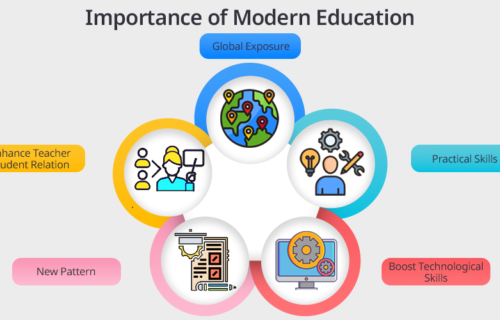
Many educational systems still teach outdated content that does not match modern realities. Students memorize facts instead of learning critical thinking, creativity, and digital skills.
7.3 Overemphasis on Exams
In many countries, education is reduced to examination performance. Students are trained to pass tests rather than understand concepts or develop skills.
7.4 Technological Divide
While technology has transformed education, not everyone has equal access to digital tools and internet connectivity.
7.5 Loss of Values
In some contexts, education focuses on knowledge but neglects character and ethics, producing intelligent but irresponsible individuals.
8. Education in the Digital Age
The digital revolution has reshaped education.
8.1 Online Learning
Online platforms allow people to learn anytime and anywhere. Knowledge is no longer confined to classrooms.
8.2 Artificial Intelligence and Education
AI is transforming teaching methods, personalized learning, and assessment systems.
8.3 Lifelong Learning
In a rapidly changing world, education is no longer limited to childhood or youth. People must continuously learn new skills throughout their lives.
8.4 Global Knowledge Sharing
The internet connects learners across the world, creating a global learning community.
However, technology must be used wisely to enhance, not replace, human interaction and critical thinking.
To invest in education is to invest in the future.
9. Education and the Future of Humanity
The future of humanity depends on the quality of education we provide today.
Education will determine how we handle global challenges such as climate change, poverty, inequality, pandemics, and technological disruption.
If education is inclusive, innovative, and ethical, it can lead humanity toward a more just and sustainable world.
If neglected, ignorance and division will dominate.
10. Conclusion: Redefining Education
Education is not just a system; it is a philosophy of life. It is the bridge between what humans are and what they can become.
True education does not only fill minds with information; it shapes hearts, builds character, and empowers societies.
To invest in education is to invest in the future.