1. Introduction: Education as the Mirror of Identity
Every human being asks, consciously or unconsciously, a fundamental question:
“Who am I?”
The answer to this question is not born fully formed. It is constructed gradually through experiences, relationships, culture, language, and, most importantly, education.
Education does not only teach people what to know; it teaches them who to be.
Through education, individuals develop beliefs, values, ambitions, fears, and visions of themselves. In this sense, education is not merely an academic process—it is an identity-building process.
A person is not only shaped by their genes or environment, but also by the ideas, narratives, and knowledge they encounter through learning.
Thus, to understand identity, we must understand education.
2. What Is Identity?
Identity refers to how individuals perceive themselves and how they are perceived by others.
2.1 Personal Identity
Personal identity includes:
- Personality traits
- Beliefs and values
- Skills and abilities
- Dreams and aspirations
- Moral principles
Education plays a central role in shaping each of these dimensions.
2.2 Social Identity
Social identity refers to how individuals relate to groups such as:
- Family
- Community
- Nation
- Religion
- Profession
- Culture
Education teaches people how to belong, how to conform, and how to differentiate themselves.
2.3 Cultural Identity
Cultural identity is shaped by language, traditions, history, and shared memories.
Education transmits culture from one generation to another.
Without education, culture would disappear.
3. The Role of Education in Early Identity Formation
Identity formation begins in childhood.
3.1 Family as the First School
Before children enter formal schools, families serve as their first educational environment.
Parents and caregivers teach children:
- Language
- Behavior
- Values
- Gender roles
- Social expectations
These early lessons form the foundation of identity.
3.2 School as a Second Identity Factory
When children enter school, they encounter new rules, norms, and expectations.
Schools teach not only subjects but also:
- Discipline
- Competition
- Cooperation
- Hierarchy
- Success and failure
Through these experiences, children learn how to see themselves in relation to others.
4. Education and Self-Perception
Education influences how individuals evaluate their own worth.
4.1 Labels and Identity
Students are often labeled as:
- “Brilliant”
- “Average”
- “Slow”
- “Troublemaker”
- “Gifted”
These labels can shape self-perception for life.
A child repeatedly told they are “slow” may internalize that identity, even if they have hidden talents.
Thus, education has psychological power.
4.2 Success, Failure, and Identity
Academic success often becomes a measure of self-worth.
Students who excel academically may develop confidence, while those who struggle may develop feelings of inferiority.
However, academic performance does not always reflect true intelligence.
Education systems that equate grades with worth risk damaging human identity.
5. Education and Social Roles
Education prepares individuals for social roles.
5.1 Professional Identity
Education shapes career paths and professional identities.
A person trained as a doctor, teacher, engineer, or artist often defines themselves by that profession.
Thus, education determines not only what people do but who they become.
5.2 Gender Identity and Education
Education influences how individuals understand gender roles.
In some societies, education reinforces traditional gender expectations.
In others, it challenges them.
Thus, education can either perpetuate or transform gender identities.
6. Education and Cultural Identity
Education plays a crucial role in preserving or transforming culture.
6.1 Language and Identity
Language is the core of cultural identity.
When education prioritizes foreign languages over indigenous languages, cultural identity can weaken.
Conversely, when education values local languages, cultural pride strengthens.
6.2 Colonial Education and Identity Crisis
In many regions, colonial education systems reshaped identity.
Colonized peoples were taught to admire foreign cultures and devalue their own traditions.
This created an identity crisis:
- Who are we?
- Whose knowledge is superior?
- Which culture should we follow?
Education became a tool of psychological colonization.
7. Education and National Identity
Education shapes how citizens perceive their nation.
7.1 History Education
The way history is taught influences national identity.
History can be used to:
- Promote unity
- Justify power
- Create heroes and enemies
- Shape collective memory
Thus, education is a political tool.
7.2 Civic Education
Education teaches citizens their rights and responsibilities.
An informed citizenry is essential for democracy.
Without civic education, national identity becomes fragile.
8. Education and Global Identity
In the globalized world, education shapes global identity.
8.1 Exposure to Global Knowledge
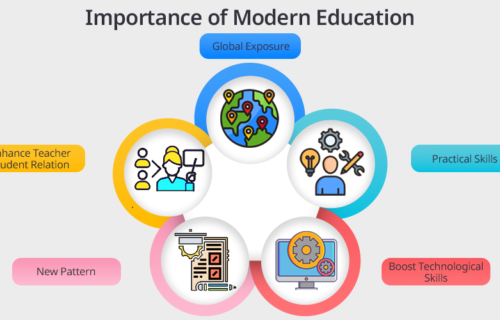
Modern education exposes individuals to global ideas, cultures, and values.
This can broaden identity but also create tension between local and global identities.
8.2 Digital Identity
Digital education and social media influence how individuals construct online identities.
People now have multiple identities: physical, social, and digital.
Education must help individuals navigate this complexity.
9. Education and Identity Conflict
Education can create identity conflicts.
9.1 Tradition vs Modernity
Educated individuals may feel torn between traditional values and modern ideals.
This tension can lead to identity struggles.
9.2 Individuality vs Conformity
Education often encourages conformity, while individuals desire uniqueness.
Balancing individuality and social integration is a key challenge of identity formation.